Take the next step & schedule a call today


FUT vs FUE Surgery in UK: Which Surgical Hair Transplant is Right for You?

Hair loss affects millions of men and women worldwide, leading many individuals to explore permanent hair restoration solutions. Among the most established surgical treatments available today are Follicular Unit Transplantation (FUT) and Follicular Unit Extraction (FUE). When researching FUT vs FUE surgery in UK, patients often want to understand the differences between these two procedures, …

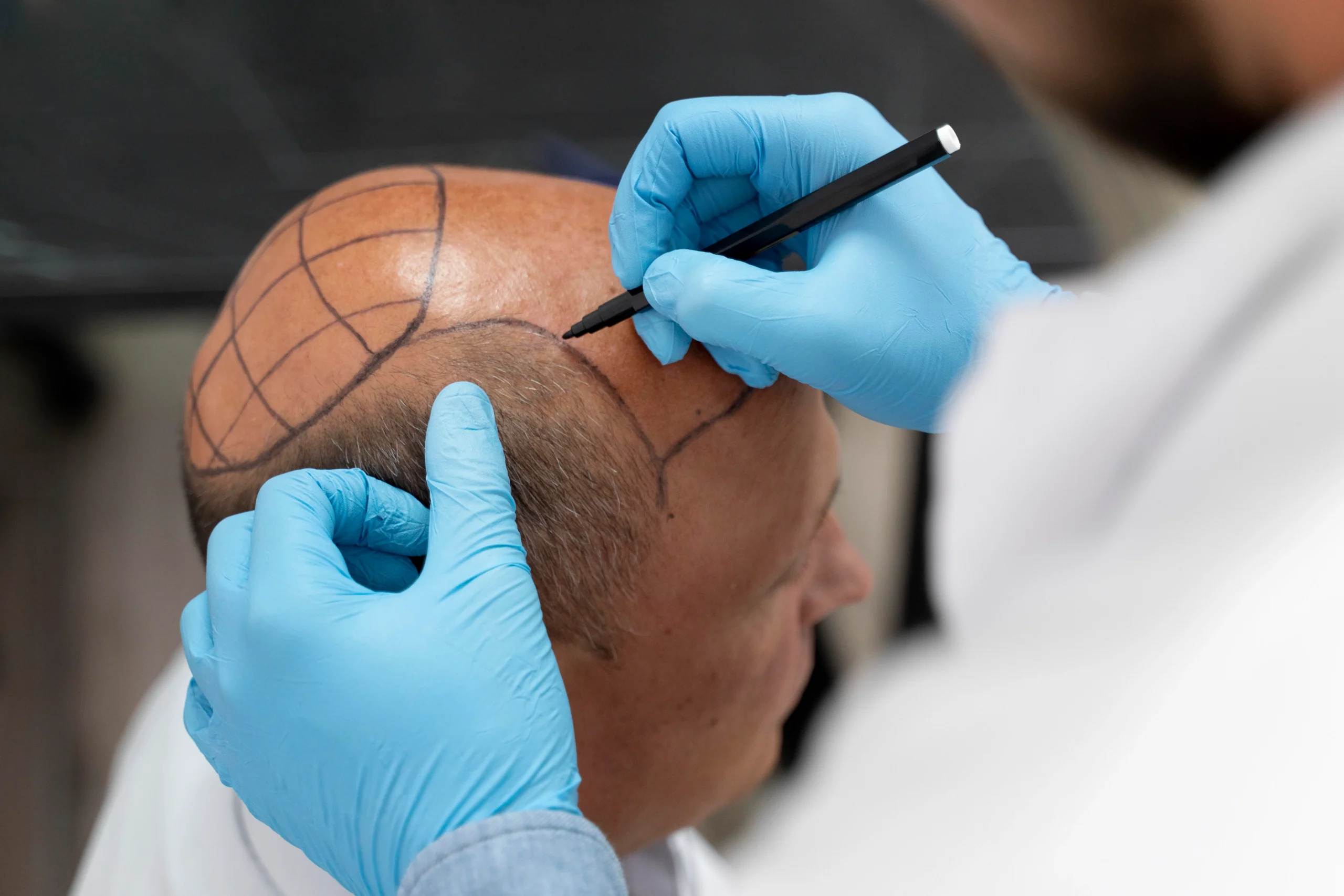
A close-up view of a surgeon wearing blue gloves using a black marker to draw a structural grid template on a male patient's balding scalp for FUT vs FUE surgery in uk planning.

Hair loss affects millions of men and women worldwide, leading many individuals to explore permanent hair restoration solutions. Among the most established surgical treatments available today are Follicular Unit Transplantation (FUT) and Follicular Unit Extraction (FUE). When researching FUT vs FUE surgery in UK, patients often want to understand the differences between these two procedures, including recovery, scarring, graft survival, suitability, and long-term results.

Both FUT and FUE are designed to restore hair growth by transplanting healthy hair follicles from a donor area to areas affected by thinning or baldness. However, the surgical techniques used to harvest these follicles differ significantly, which can influence the treatment experience and recovery process.

This comprehensive guide explains FUT vs FUE surgery in UK, helping patients make informed decisions about which hair transplant method may best suit their needs and expectations.

FUT vs FUE Surgery in UK: Understanding the Basics

Before comparing the two procedures, it is important to understand their primary goal. Both FUT and FUE aim to relocate genetically resistant hair follicles from the donor area, typically located at the back and sides of the scalp, to areas experiencing hair loss.

The success of FUT vs FUE surgery in UK is not necessarily determined by the technique alone but by proper patient selection, surgical planning, and realistic expectations.

Similarities Between FUT and FUE

Both procedures:

  • Use the patient’s own hair follicles
  • Provide long-term hair restoration
  • Can produce natural-looking results
  • Require local anesthesia
  • Depend on donor hair availability
  • Follow the natural hair growth cycle

Despite these similarities, important differences exist in how grafts are harvested and how recovery progresses.

What Is FUT Hair Transplant Surgery?

Follicular Unit Transplantation (FUT) is often referred to as the strip method.

How FUT Works

During FUT surgery:

  1. A strip of scalp is removed from the donor area.
  2. The donor site is carefully closed with sutures.
  3. Hair follicles are dissected under magnification.
  4. Individual grafts are transplanted into recipient areas.

The technique allows surgeons to harvest a large number of grafts during a single session.

Advantages of FUT

Benefits may include:

  • Higher graft yield in certain cases
  • Efficient harvesting of large graft numbers
  • Preservation of donor hair resources
  • Suitable for extensive hair loss

For patients requiring significant coverage, FUT may offer important advantages.

What Is FUE Hair Transplant Surgery?

Follicular Unit Extraction (FUE) involves harvesting individual follicular units directly from the donor area.

How FUE Works

The procedure typically includes:

  1. Individual follicle extraction
  2. Donor area preservation
  3. Recipient site preparation
  4. Precise graft placement

No linear strip of scalp is removed.

Advantages of FUE

Common benefits include:

  • No linear scar
  • Faster donor area healing
  • Short hairstyle flexibility
  • Reduced postoperative discomfort

FUE has become increasingly popular due to its minimally invasive nature.

FUT vs FUE Surgery in UK: Surgical Technique Comparison

Understanding procedural differences is essential when evaluating FUT vs FUE surgery in UK.

FUT Harvesting Method

FUT involves:

  • Strip excision
  • Microscopic graft dissection
  • Linear donor closure

This approach allows access to a large number of follicles efficiently.

FUE Harvesting Method

FUE utilizes:

  • Individual follicle extraction
  • Circular micro-incisions
  • Distributed donor harvesting

The technique avoids a long donor scar but may require more extensive extraction.

FUT vs FUE Surgery in UK: Scarring Differences

Scarring is often a major consideration for patients.

FUT Scarring

FUT typically leaves:

  • A linear scar in the donor area
  • A scar hidden beneath longer hair

Many patients can conceal the scar effectively with appropriate hair length.

FUE Scarring

FUE generally produces:

  • Small circular extraction marks
  • Scattered micro-scars

These marks are usually less noticeable, particularly with shorter hairstyles.

Which Procedure Leaves Less Visible Scarring?

Patients who prefer very short hairstyles often favor FUE because it avoids a single linear scar.

However, scar visibility depends on healing characteristics and surgical technique.

FUT vs FUE Surgery in UK: Recovery Timeline

Recovery experiences differ between the two procedures.

FUT Recovery

Patients may experience:

  • Donor area tightness
  • Sutures or staples
  • Longer donor healing period

Physical activity restrictions may be slightly extended.

FUE Recovery

Patients often notice:

  • Faster donor recovery
  • Reduced discomfort
  • Smaller healing sites

Many individuals appreciate the less invasive donor harvesting process.

Graft Yield: FUT vs FUE

Graft numbers can influence procedure selection.

FUT Graft Capacity

FUT may allow:

  • Larger graft sessions
  • Efficient harvesting
  • High follicle preservation

This can be advantageous for extensive hair restoration cases.

FUE Graft Capacity

FUE also allows substantial graft harvesting but may require:

  • Longer procedure times
  • Multiple sessions in some cases

The ideal approach depends on individual donor characteristics.

Hair Density Outcomes

One of the most common questions regarding FUT vs FUE surgery in UK concerns density.

Can Both Procedures Produce Natural Results?

Yes. Both techniques can achieve:

  • Natural hairlines
  • Appropriate density
  • Long-term growth

The surgeon’s skill often plays a greater role than the harvesting method itself.

Factors Affecting Density

Density outcomes depend on:

  • Donor hair quality
  • Graft survival
  • Hair characteristics
  • Surgical planning

Both FUT and FUE can produce excellent cosmetic results when performed appropriately.

Donor Area Preservation

Preserving donor hair is important because donor resources are finite.

FUT and Donor Management

FUT may preserve donor reserves efficiently by harvesting from a concentrated area.

FUE and Donor Management

FUE requires careful extraction planning to avoid:

  • Overharvesting
  • Visible thinning
  • Uneven donor appearance

Experienced surgeons carefully manage donor resources regardless of technique.

Who Is a Good Candidate for FUT?

Certain patients may benefit more from FUT.

Common FUT Candidates

These may include individuals who:

  • Require large graft numbers
  • Prefer maximizing donor yield
  • Typically wear longer hairstyles
  • Have extensive hair loss

A consultation helps determine suitability.

Who Is a Good Candidate for FUE?

FUE is often preferred by patients seeking minimal visible scarring.

Common FUE Candidates

These may include individuals who:

  • Prefer short hairstyles
  • Desire less invasive harvesting
  • Have adequate donor density
  • Need smaller transplant sessions

Patient goals often influence technique selection.

FUT vs FUE Surgery in UK: Procedure Duration

Treatment duration varies.

FUT Surgery Time

FUT may be more efficient when harvesting large graft numbers.

FUE Surgery Time

FUE often requires:

  • Individual extraction
  • Longer harvesting periods
  • Detailed follicle collection

Procedure length depends on graft requirements.

Long-Term Results After Hair Transplant Surgery

Long-term success depends on multiple factors beyond the harvesting technique.

What Influences Results?

Factors include:

  • Surgical expertise
  • Donor quality
  • Hair characteristics
  • Postoperative care
  • Future hair loss progression

Both FUT and FUE can provide durable outcomes.

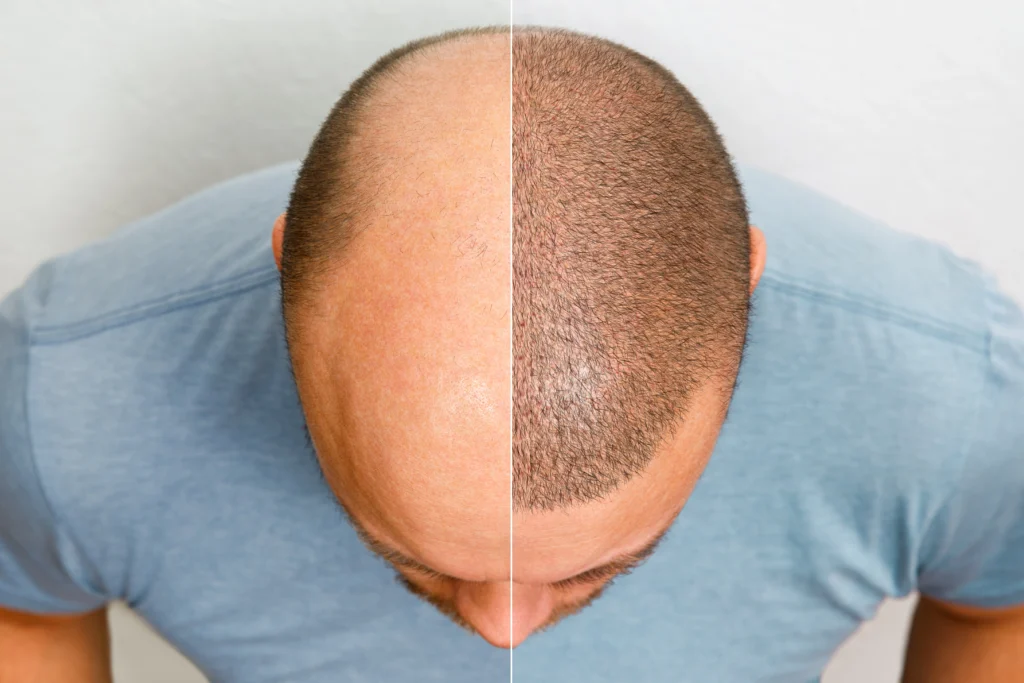
A top-down split comparison image showing a male patient's scalp with extensive hair loss on the left, and thick, short hair growth following a successful hair transplant on the right, illustrating the surgical results of FUT vs FUE surgery in uk.

Hair Growth Timeline

Typical progression includes:

  1. Healing phase
  2. Temporary shedding
  3. Dormancy period
  4. New growth
  5. Hair maturation

Final results often become apparent around 12 months after surgery.

Cost Considerations

When comparing FUT vs FUE surgery in UK, patients often evaluate cost differences.

FUT Costs

FUT may sometimes be more cost-efficient when large graft numbers are required.

FUE Costs

FUE often involves:

  • More labor-intensive harvesting
  • Longer surgical times

This may influence overall treatment costs.

Price should never be the sole deciding factor when selecting a procedure.

Common Myths About FUT and FUE

Several misconceptions exist regarding hair transplantation.

Myth 1: FUE Always Produces Better Results

Both procedures can produce excellent outcomes when performed correctly.

Myth 2: FUT Is Outdated

FUT remains a valuable technique for selected patients.

Myth 3: FUE Leaves No Scars

FUE creates small scars, although they are typically less noticeable than a linear scar.

Myth 4: Recovery Is Identical

Recovery experiences differ because harvesting methods differ.

Why the Consultation Is So Important

A comprehensive consultation is essential before choosing between FUT and FUE.

Areas Evaluated During Consultation

Surgeons typically assess:

  • Hair loss pattern
  • Donor density
  • Hair characteristics
  • Future hair loss risk
  • Cosmetic goals

These factors help determine the most appropriate approach.

Why the UK Remains a Popular Destination for Hair Restoration

The UK is home to many experienced hair restoration specialists and regulated healthcare facilities.

Benefits of Seeking Treatment in the UK

Patients often value:

  • Established medical standards
  • Experienced practitioners
  • Advanced surgical techniques
  • Comprehensive consultations

Proper research remains important when selecting a provider.

Questions to Ask During Your Hair Transplant Consultation

Before making a decision, consider asking:

  • Am I a candidate for FUT or FUE?
  • How many grafts are recommended?
  • What scarring should I expect?
  • How long will recovery take?
  • What results are realistically achievable?

Clear communication supports informed decision-making.

Conclusion

Understanding FUT vs FUE surgery in UK is an important step for anyone considering surgical hair restoration. Both procedures offer proven, effective solutions for hair loss, but they differ in harvesting techniques, recovery experiences, scarring patterns, and donor area management. Neither method is inherently superior; the best choice depends on individual anatomy, lifestyle preferences, and long-term hair restoration goals.

A thorough consultation with an experienced hair transplant surgeon remains the most effective way to determine the right treatment approach. By understanding the advantages, limitations, and recovery expectations of each procedure, patients can make confident decisions and set realistic expectations for their hair restoration journey.

Individuals researching hair restoration may also benefit from learning more about FUE hair transplant recovery, FUT donor management, PRP therapy, hair loss prevention treatments, and long-term scalp health strategies to support comprehensive hair restoration outcomes.


Book a Consultation

It’s easy and free!

Jyothika

Jyothika

Leave a Reply

Your email address will not be published. Required fields are marked *